
This Week’s
‘Shooting Stars’ Are The Best
Until Fall. Here’s how you See ‘Fireballs’
From Home
Until Fall. Here’s how you See ‘Fireballs’
From Home
To see shooting stars you need two things; comet dust and darkness. This
week we have both of those things, with the simultaneous arrival of the Lyrid
meteor shower and a New Moon—the perfect combination for anyone who wants to
see fireballs in the night sky.
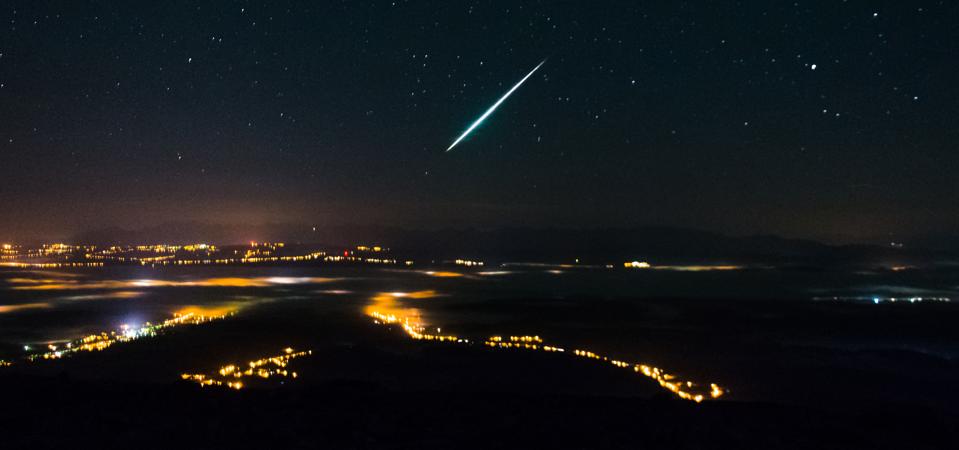
What is the
Lyrid meteor shower?
It’s a semi-important, medium strength meteor shower that’s peaking in
the darkest skies possible. As well as taking place just after a New Moon—when
our satellite is just 1% illuminated—a reduction of light pollution because of
lockdown may make shooting stars from the Lyrids easier to spot.
The American Meteor Society reports
that observers can expect around 18 shooting stars per hour, each one traveling
at 30 miles/48km per second. “These meteors also usually lack persistent trains
but can produce fireballs,” reads it website. “Fireballs” are defined as very bright
meteors about the same brightness as Venus.
When is the
Lyrid meteor shower?
It takes place from April 16-30, 2020, but the “peak” is before dawn on
Wednesday, April 22, 2020. However, the American Meteor Society state
that the Lyrids usually produces good rates of shooting stars
for three nights, so it’s worth also looking skywards on Tuesday, April 21 and
Thursday, April 23, 2020.
Today In: Science
How to see
the Lyrid meteor shower
Best viewed from the northern hemisphere, shooting stars from the Lyrid
meteor shower can appear anywhere in the sky, but they will appear to
originate from the constellation of Lyra (the harp), which surround bright star
Vega. That star rises in the northeast about 9 p.m. this week. From midnight
until around an hour before dawn is the darkest time of night when Earth busts
through the debris left in the solar system by comet C/1861 G1 (Thatcher).
That’s when to maximize your chances of seeing shooting stars,
Is it
possible to see shooting stars from cities?
Yes, but don’t expect dozens or hundreds to “rain” down on you. Although
the Lyrids have been known to occasionally produce a “meteor storm,” the best
best way to see some is merely to go outside and stargaze for a few hours. Pick-out
some constellations—the Big Dipper, its parent constellation Ursa Major and Leo
are perfectly placed in the “shooting stars zone”—and you’ll probably see one
or two of the Lyrids.
A slight reduction in light pollution might make it easier to see bright
Lyrids from cities in 2020, though the most important things are a clear sky
and bags of patience.
When are the
best meteor showers of 2020?
Again, it’s all about moonlight. Judged purely on shooting
stars-per-second, the “best” meteor showers of the year and the Perseids in
August and the Geminids in December. However, this year the Perseids will be
washed-out by a big moon. So here’s your
must-see shooting star-gazing schedule
for 2020:
- April 21-22: Lyrids meteor shower (moon is 1% illuminated)
- November
16-17: Leonids meteor shower (moon is 5% illuminated)
- December
13-14: Geminids meteor shower (moon is 1% illuminated)
Wishing you clear skies and wide eyes.


 Posts
Posts


No comments:
Post a Comment